Showing posts with label history. Show all posts

Thursday, July 25, 2013

The Images of Miss Saigon: A History

The Images of Miss Saigon: a History

Miss Saigon has been wowing audiences since 1989 and is set to wow audiences at Signature in just a few weeks. But the show's genealogy goes much further back than just 1989. Here's an abbreviated history of where this wildly successful musical comes from.


1880
In 1887, John Luther Long published a short story called "Madame Butterfly." It was the tragic love story of a US naval officer and a Japanese geisha. Above is an illustration from that short story.
1890

1900
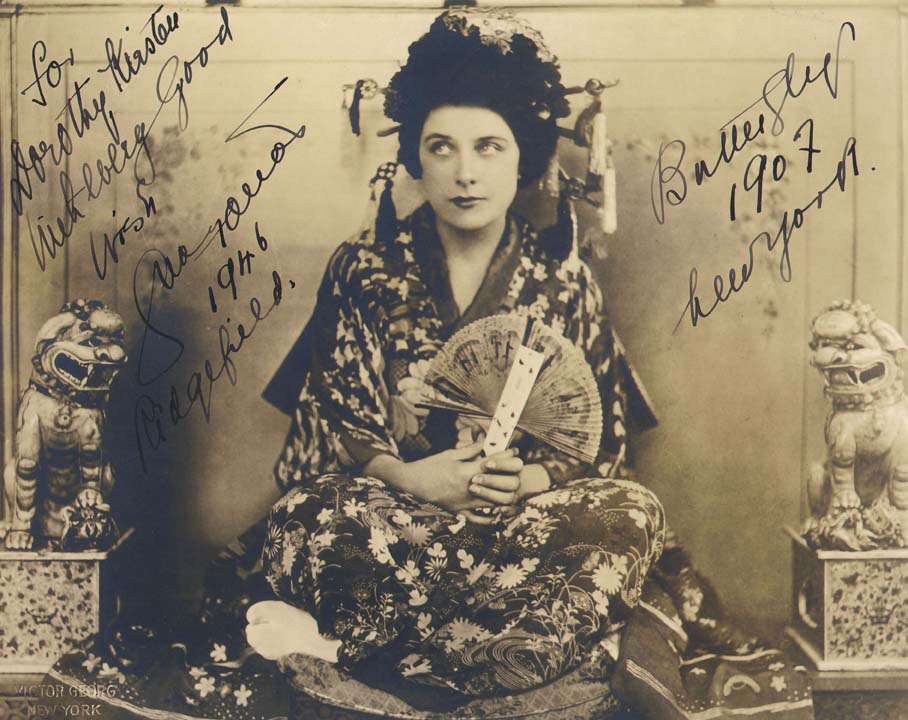
Davis Belasco made the short story into a one-act (1900) which Puccini saw. This inspired him to write his opera Madame Butterfly which was first performed in 1907. The picture above is Geraldine Farrar in the title role. Below is the poster from the original production.

1910

1920

1930

1940
At the end of WWII, Vietnam was no longer occupied by Japan who had taken over the French colony when France was invaded by Germany. However, many did not want to fall back under French rule, so the communist movement led by Ho Chi Minh (above) declared Vietnam to be an independent country and went to war with France.
 1950
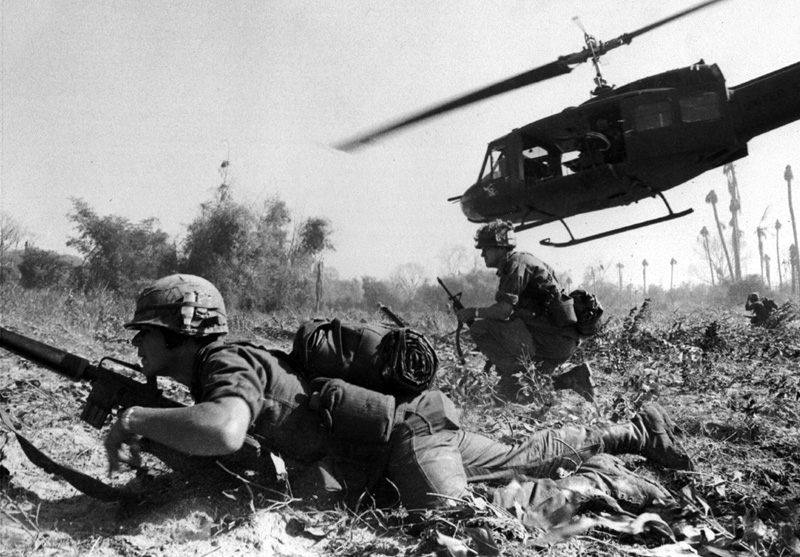
North Vietnam  was  recognized as a country after defeating the French. In 1955, America decided to give military aid to South Vietnam in order to prevent communism from spreading from the North to the South. The conflict would last for two decades. The above photo is from the US Army.
1960

1970
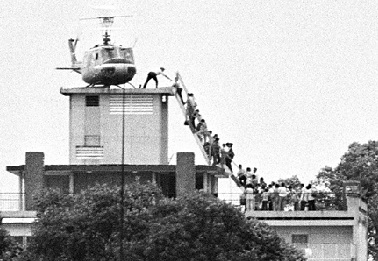
 In 1975, the North Vietnamese Army succeeded in marching through South Vietnam to the capitol: Saigon. The city was taken as the last US soldiers fled in helicopters. The above photo of a helicopter is an iconic image of the fall of Saigon and of the musical Miss Saigon as well.
 1980
Schönberg saw the above photo of a mother leaving her half-Vietnamese, half-American son at an airport terminal where he would go to live with his father in American. Schönberg was reportedly inspired by this image, which he considered to be the ultimate sacrifice, to write a musical.
1990
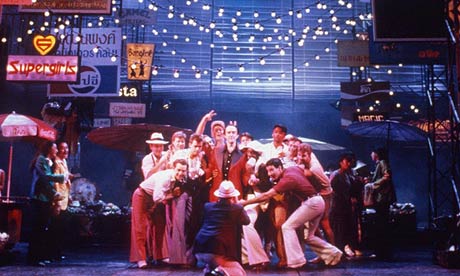
The musical, a retelling of the Madame Butterfly story in the Vietnam War, premiered in 1989 in London. The above photo is of the original London production.
2000

2010

And in 2013, Signature Theatre opens their 2013/2014 season with an environmental production of Miss Saigon where the entire theatre will be transformed into 1970s Vietnam. Get your tickets here!

Interested in learning more about Signature's production of Miss Saigon? Be sure to sign up for an exclusive backstage tour of the production. Tickets are only $10. 

Wednesday, June 12, 2013

Today in Theatre History: Re-Imagining the Past

TODAY IN THEATRE HISTORY: June 12th
In the “Today in Theatre History” series, we take a specific event in theatre history and use it as a starting point for discussion about aspects of theatre – past, present, and future.
By Irene Casey, Education Intern 

On June 12th, 1977 the original Broadway production of Pippin closed after 1,944 performances
 

http://dramaleague.org/wp-content/uploads/2012/03/Pippin.jpg
The cast of the 1972 Broadway production of Pippin.Source: http://dramaleague.org/blog/2012/03/12/diane-paulus-to-stage-new-pippin-at-a-r-t-this-winter/ 
Broadway today is filled with "revivals." But what do people mean when they say that something is a revival? That the show has already been produced somewhere? Or that it has already been on Broadway? How different are revivals from the original production? Typically, a revival means a new production of an old show, which brings us to what happened today in theatre history: the original Broadway production of Pippin closing in 1977.

The original Broadway production of Pippin opened on October 13, 1972 (after a try out in D.C.). Pippin's book was written by Roger O. Hirson, with music and lyrics by Stephen Schwartz, and was originally directed by Bob Fosse. Fosse saw the musical, which follows a medieval prince as he becomes embroiled with a troupe of players on his quest to find his place in the word, as a surreal experience and wanted his production to disturb audiences.
Since its first production, Pippin has been performed all over the country and the world. This year, for the first time, Pippin returned to Broadway. The revival was developed at the American Repertory Theater (A.R.T.) and directed by Diane Paulus. Just this week, it won four Tony Awards including Best Revival of a Musical and Best Direction of a Musical. While the A.R.T. revival differed from the original production by trimming the first musical number and using an alternate ending, the biggest change was the way that Paulus envisioned the players. Instead of a troupe of actors, they became a troupe of circus performers, filling the musical with wild, bold spectacle. 


Paulus's revival of Pippin departs from the original in several ways. Major re-imaginings of shows are not out of the ordinary today. Whenever directors approach scripts, they think about how they want the story to be told. Each production is different because each production has different directors, designers and actors developing it. It's true that some productions stick fairly closely to the interpretation of the original production, while others take the musical or play in an entirely different direction, choosing to highlight or introduce different elements in the show. More and more productions of classic musicals and plays are closer to being adaptations than simply revivals, with directors re-imagining them to bring them into the modern day. 

Signature is know for taking big musicals and performing them in our black box theatres, creating intimate original stagings of shows that were often originally seen in giant proscenium theatres.


Signature's production of Les Miserables transformed the musical. Trevor Nunn's internationally acclaimed original production, relied heavily upon a turntable in its design. But director Eric Schaeffer used a 3/4 thrust stage that pushed the action into the middle of the audience, creating a grittier production happening just feet away from the audience. Chairs hung from the ceiling and set pieces moved on and off from the stage, entering as one thing only to re-enter a scene later as something completely different.


In 2006, the Washington Post described Signature's Assassins as a "startling new staging." Director Joe Calarco (a Signature regular) went beyond merely placing the piece in a black box and onto a way that had never been seen before. The set was a literal mirror image of the audience: rows and rows of chairs on risers, all identical to what the audience was sitting in. This brought the idea that these disenfranchised assassins and would-be assassins 
are just like the rest of us home in frightening and unsettling ways.

What dramatic re-imaginings of blockbuster musicals will be seen on Signature's stages next season? First up, will be an environmental production of Miss Saigon, meaning the entire theatre will become part of the set. As soon as the audience enters the theatre, they will enter the broken world of 1970s Vietnam. Check it out here.


Wednesday, May 8, 2013

Today in Theatre History: The Mystery of the Long-Running Show

TODAY IN THEATRE HISTORY: May 8th
In  the “Today in Theatre History” series, we take a specific event in theatre history and use it as a starting point for discussion about aspects of theatre – past, present, and future.
The cast of Signature's Dreamgirls.
Photo: Chris Mueller
Today in theatre history:
-         “Rise and Fall of Little Voice” closes at the Neil Simon Theatre after 9 performances (1994)
-         “Earl of Ruston” closes at Billy Rose Theater  after 5 performances (1971)
-         “Shuffle Along” opens at Broadway Theater for 4 performances (1952)
-         “Funny Thing Happened” opens at Alvin Theater for 965 performances (1962)

All shows must close. The question then is how long will the show survive?

When it comes to theatre there are two terms used to define the "run" of the show (aka how long the show plays for):

The Broadway cast of The Phantom of the Opera
Source: http://bit.ly/12RbB2D
In an open-ended run there is no set end date. The greater the demand for tickets, the longer the run. When there is no longer a demand for tickets or when it becomes more profitable to license the show to other producers, a closing date is picked. Shows like The Phantom of the Opera,  Cats and Wicked all had open-ended runs on Broadway. Because Signature Theatre only has two performances spaces and produces up to eight fully-mounted productions a season, open-ended runs are simply not feasable. 

Signature shows therefore have what is called a limited engagement run. This means that there is a specific end date set for the show before performances even start. If the show is selling very well towards the end of the run, sometimes a show will receive an extension, meaning that another week or two of performances are added. While this is one way for patrons to gauge whether or not a show is selling well, there are times when a show is selling well but there is no extension because the space is needed for another production.

So why do some shows get extended and others don't? Why do some open-ended runs only last for five performances and others 5,000? In looking at Signature Theatre's production history, some themes became apparent:

Star Power
Big names have a tendency to draw big crowds. A popular actor's fan base will fill a surprising number of seats. In Signature Theatre's recent production of "Dreamgirls" actress Nova Y. Payton garnered an impressive amount of attention for her phenomenal performance of Effie. By the end of the show many people were coming to see Payton perform because they had heard great things and tickets were in such high demand that the show was extended. 
Nancy Robinette and Sherri L. Edelen in Walter Cronkite is Dead. Source: http://bit.ly/18Uh2kF
Signature's production of Walter Cronkite is Dead was extended before the show even opened because the show's two actresses, Sherri L. Edelen and Nancy Robinette, were (and still are) both DC area stars.


Known Titles
The barricade in Signature's production of Les Miserables.

Source: http://bit.ly/109oKXg
Unless you've been living under a rock, you've probably heard of Les Miserables, The Phantom of the Opera or Sweeney Todd. In today's economy the average person is less-inclined to spend money on a show they've never heard of, as unfortunate as that is. Tourists in New York are more likely to spend money on a ticket to The Phantom of the Opera than a ticket to Return to the Forbidden Planet (the irony being that Phantom started off as an unknown show - but that's a discussion for another blog post). When Signature produced Les Miserables tickets sold incredibly well and the run was extended
because of the combination of a quality product
and also a well-known show.

An Overall Good Production
Fiona Shaw in The Testament
of Mary.

Source: http://bit.ly/11QOAxy
Then there are the shows that don't have a star or a well-known title and still manage to be incredibly successful. Shows like Really, Really that had a young cast and a young playwright but would have been extended if not for another show needing the space.

And let us not forget the shows with great casts and great scripts which, artistically speaking, deserve a longer run; shows like The Testament of Mary that managed to nab several Tony Award nominations but will shortly be closing.

Statistics show that three out of four shows on Broadway are a financial failure. Who gets the open-ended run? Who gets the extension? Who closes after four performances? The ticket-buyers will ultimately decide.

Sources
http://www.tdf.org/tdf_servicepage.aspx?id=103
http://en.wikipedia.org/wiki/List_of_the_longest-running_Broadway_shows
http://www.artsjournal.com/aboutlastnight/2013/01/tt_the_one_good_reason_to_take.html


Wednesday, April 10, 2013

Today in Theatre History: Musical Theatre Goes Global

TODAY IN THEATRE HISTORY: April 10th

In  the “Today in Theatre History” series, we take a specific event in theatre history and use it as a starting point for discussion about aspects of theatre – past, present, and future.

On April 10th, 1994 the hit-musical Les Miserables, opened at the Hiten Theatre in Osaka, Japan.
Click here to listen to a recording of "One Day More" performed by the Japanese cast.
The Japanese "Les Mis" cast performs "One Day More."
Source: http://bit.ly/14bx6ln

Japan? Last time I checked Les Miserables was not a Japanese musical.” Correct. However, what many people don’t realize is that there is a steadily growing musical theatre world outside of the United States. Musicals are no longer solely an American, or even British, art form.

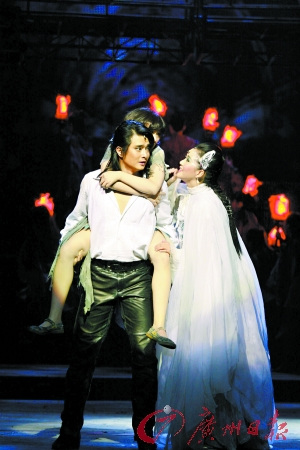
Look at the Shiki Theatre Company in Japan – they’ve been producing original musicals since 1962. Look at the Shanghai Grand Theatre which in 2011 produced the first all-Chinese production of “Mamma Mia,” or even the partnership between the New York Musical Theatre Festival (NYMF) and the Korean Daegu International Music Festival. And not only are these shows being produced and performed in their countries of origin, but Korean musicals are touring to Japan, Japanese musicals to Taiwan, etc.

COMPARE: Broadway "Mamma Mia" vs. Beijing "Mamma Mia"


EXPANSION AND EVOLUTION
"Butterflies" was China's first Broadway-style musical.
Source: http://bit.ly/10SoHxl
How is it that something so “quintessentially” American is finding its way into the hearts and minds of people all across Asia? The culture-specific evolution of the art form speaks for itself:
Asian countries are not only latching on to Western stories and scores, but they are now expanding on that foundation and creating their own works: “As countries have yearned for independence, musicals have had to accommodate their particular tastes. American and British productions have been staged in other languages, and new markets have been created and know-how accumulated. Now these countries are starting to make the things that people want to see.”

Who knows, perhaps in coming years the musical will no longer be defined as an American art form, but rather as an international art form. Best keep an eye out.

SIGNATURE THEATRE CROSSING BORDERS
For our 2013 SigLab project, Signature Theatre will be spending July 9th-27th workshopping a new musical called “Spin,” based on the hit Korean comedy, “Speedy Scandal”:

Faded pop star Evan coasts through life. However, when a surprise daughter and grandson arrive on his doorstep, Evan must choose between the gift of family and the glittering appeal of fame. Spin is a humorous, charming and heartwarming tale about what really matters in life.”

LEARN MORE:
Japan

China

Korea

In this blog post we’ve focused on the expansion of musical theatre into Asia. However, the musical theatre movement in many other countries and continents is alive and well! Click here to learn about Theatre Communication Group’s international Music Theatre NOW Competition.

Wednesday, March 27, 2013

Happy World Theatre Day!

Today is World Theatre Day!
If you didn't know that, don't worry, you're in good company. We here at Signature Theatre only recently discovered it, but we think it's a pretty great idea.

World Theatre Day (WTD) was instituted by the International Theatre Institute (ITI), an organization that has centers in more than 100 countries all over the world and seeks to promote the arts and communication and collaboration between artists across continents. The first WTD was celebrated on March 27th, 1961 and its popularity has only grown since.

Every year for WTD, an International Message is composed. This message is written by a prominent figure (usually from an arts-related field) and is a reflection on "Theatre and a Culture of Peace." On WTD this message is broadcast via radio, television, and the internet in more than 20 different languages in countries and ITI centers worldwide.

This year's message is composed by Dario Fo, a renowned Italian theatre artist. Read a little bit about Fo and his exceptional career below:

Dario Fo is an Italian satirist, playwright, theatre director, actor, composer and recipient of the 1997 Nobel Prize in Literature. Fo and his wife, the actress Franca Rame, founded the Campagnia Dario Fo–Franca Rame in 1959, and their humorous sketches on the television show Canzonissima soon made them popular public personalities. In 1968 Fo and Rame founded another acting group, Nuova Scena, and in 1970 they started the Collettivo Teatrale La Comune.Fo has written about 70 plays, coauthoring some of them with Rame. His plays have been translated into 30 languages, and upon awarding him the 1997 Nobel Prize in Literature, the committee called Fo a writer “who emulates the jesters of the Middle Ages in scourging authority and upholding the dignity of the downtrodden.”

Here are some ways to join the celebration:
  • Listen to or read Dario Fo's message:
  • Watch a video of John Malcovich sharing the 2012 WTD International Message:
  • Watch videos of people from all over the world reading WTD International Messages: 
  • Tweet about the WTD message or about WTD festivities using the hashtag #WTD13
  • Learn more about the Around-the-Globe Chain Play
  • Share a facebook status about what you love about theatre
  • Buy a ticket to see a show! (Signature Theatre's "The Last Five Years" begins previews on April 2nd)
  • Check out some cool world theatre traditions by browsing the pictures below:

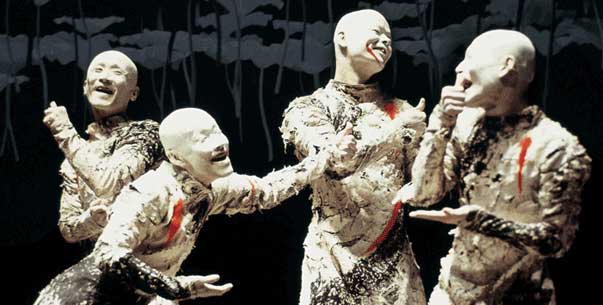
Japan: Butoh
 
Italy: Commedia dell'Arte


France: Mime

England: British Pantomime

India: Sanskrit Drama


Bali: Wayang Kulit (shadow puppets)


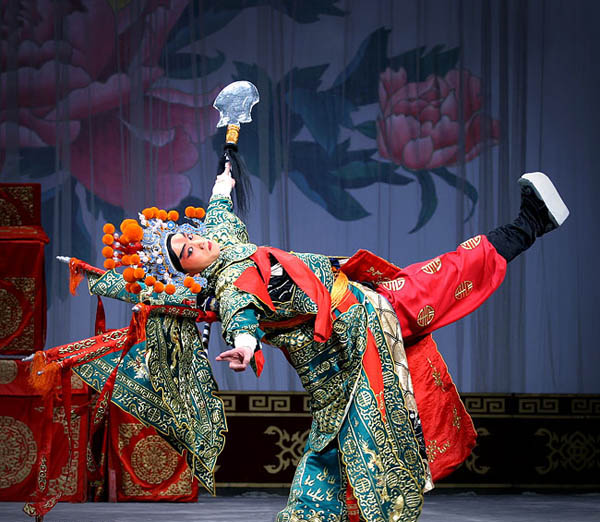
China: Peiking Opera
 
SOURCES
http://artcaro.files.wordpress.com/2012/11/kabuki1.jpg?w=640


Thursday, January 17, 2013

KidVids Part 2: French Connection

During Boot Camp, the first three weeks of rehearsal for Signature in the Schools: Revolution, the cast and crew learned all about the history behind the play. At the end of Boot Camp, they were asked to put together videos showing off what they'd learned.

Below is the video created by the second group: the French Connection. The group was assigned to create a video explaining how the French Revolution got started, including the monarchy's financial crisis and the beginnings of political upheaval. They chose to put their story in a modern setting - the overbearing King Corporation and its employees.

Check out the video below!


Share

Twitter Delicious Facebook Digg Stumbleupon Favorites More