Showing posts with label Les Miserables. Show all posts

Thursday, September 12, 2013

In With the Interns: Kelley Harrington


Name:  Kelley Harrington


Long-Term Goals: I plan on working full-time as a production dramaturg, or in theatre education/administration, preferably in the DC area. I also hope to publish a book at some point and travel as much as possible!

Favorite Musical: Les Misérables, Assassins

Favorite Play: 
(General): Translations by Brian Friel
(Older Play): Nathan the Wise by Gotthold Lessing
(New Play): The Convert by Danai Gurira

Favorite Movie:  The Lord of the Rings trilogy (Return of the King if I had to pick one)

Internship Start Date: September 3, 2013

Internship Duties: Production dramaturgy and teaching for “Signature in the Schools” and additional duties for the Education Department. 

Favorite Things About Signature: I love that Signature is not afraid to do new musicals and perform well-known musicals in a fresh new light. I also like the atmosphere of the office. This staff clearly likes to have fun with their work!

Favorite Things About D.C.: I’m super excited about the history and arts that I see everywhere I go in this city. From the grandiose Kennedy Center to the community contributions that allow Signature to put on awesome shows, D.C. cares about theatre, and I’m thrilled to be part of it all now. I’ve also been impressed by the sheer number of beautiful fountains in this city. Seriously, they’re everywhere.

General Cool Things About You: I know how to water-ski; I once received dramaturgy advice from Stephen Schwartz; I often listen to (and sing) Disney songs to get motivated; I am a self-professed chocoholic.

Pick two celebrities to be your parents. Who and Why?
Tina Fey & Neil Patrick Harris : My life would be one long musical comedy.

Wednesday, May 8, 2013

Today in Theatre History: The Mystery of the Long-Running Show

TODAY IN THEATRE HISTORY: May 8th
In  the “Today in Theatre History” series, we take a specific event in theatre history and use it as a starting point for discussion about aspects of theatre – past, present, and future.
The cast of Signature's Dreamgirls.
Photo: Chris Mueller
Today in theatre history:
-         “Rise and Fall of Little Voice” closes at the Neil Simon Theatre after 9 performances (1994)
-         “Earl of Ruston” closes at Billy Rose Theater  after 5 performances (1971)
-         “Shuffle Along” opens at Broadway Theater for 4 performances (1952)
-         “Funny Thing Happened” opens at Alvin Theater for 965 performances (1962)

All shows must close. The question then is how long will the show survive?

When it comes to theatre there are two terms used to define the "run" of the show (aka how long the show plays for):

The Broadway cast of The Phantom of the Opera
Source: http://bit.ly/12RbB2D
In an open-ended run there is no set end date. The greater the demand for tickets, the longer the run. When there is no longer a demand for tickets or when it becomes more profitable to license the show to other producers, a closing date is picked. Shows like The Phantom of the Opera,  Cats and Wicked all had open-ended runs on Broadway. Because Signature Theatre only has two performances spaces and produces up to eight fully-mounted productions a season, open-ended runs are simply not feasable. 

Signature shows therefore have what is called a limited engagement run. This means that there is a specific end date set for the show before performances even start. If the show is selling very well towards the end of the run, sometimes a show will receive an extension, meaning that another week or two of performances are added. While this is one way for patrons to gauge whether or not a show is selling well, there are times when a show is selling well but there is no extension because the space is needed for another production.

So why do some shows get extended and others don't? Why do some open-ended runs only last for five performances and others 5,000? In looking at Signature Theatre's production history, some themes became apparent:

Star Power
Big names have a tendency to draw big crowds. A popular actor's fan base will fill a surprising number of seats. In Signature Theatre's recent production of "Dreamgirls" actress Nova Y. Payton garnered an impressive amount of attention for her phenomenal performance of Effie. By the end of the show many people were coming to see Payton perform because they had heard great things and tickets were in such high demand that the show was extended. 
Nancy Robinette and Sherri L. Edelen in Walter Cronkite is Dead. Source: http://bit.ly/18Uh2kF
Signature's production of Walter Cronkite is Dead was extended before the show even opened because the show's two actresses, Sherri L. Edelen and Nancy Robinette, were (and still are) both DC area stars.


Known Titles
The barricade in Signature's production of Les Miserables.

Source: http://bit.ly/109oKXg
Unless you've been living under a rock, you've probably heard of Les Miserables, The Phantom of the Opera or Sweeney Todd. In today's economy the average person is less-inclined to spend money on a show they've never heard of, as unfortunate as that is. Tourists in New York are more likely to spend money on a ticket to The Phantom of the Opera than a ticket to Return to the Forbidden Planet (the irony being that Phantom started off as an unknown show - but that's a discussion for another blog post). When Signature produced Les Miserables tickets sold incredibly well and the run was extended
because of the combination of a quality product
and also a well-known show.

An Overall Good Production
Fiona Shaw in The Testament
of Mary.

Source: http://bit.ly/11QOAxy
Then there are the shows that don't have a star or a well-known title and still manage to be incredibly successful. Shows like Really, Really that had a young cast and a young playwright but would have been extended if not for another show needing the space.

And let us not forget the shows with great casts and great scripts which, artistically speaking, deserve a longer run; shows like The Testament of Mary that managed to nab several Tony Award nominations but will shortly be closing.

Statistics show that three out of four shows on Broadway are a financial failure. Who gets the open-ended run? Who gets the extension? Who closes after four performances? The ticket-buyers will ultimately decide.

Sources
http://www.tdf.org/tdf_servicepage.aspx?id=103
http://en.wikipedia.org/wiki/List_of_the_longest-running_Broadway_shows
http://www.artsjournal.com/aboutlastnight/2013/01/tt_the_one_good_reason_to_take.html


Wednesday, April 10, 2013

Today in Theatre History: Musical Theatre Goes Global

TODAY IN THEATRE HISTORY: April 10th

In  the “Today in Theatre History” series, we take a specific event in theatre history and use it as a starting point for discussion about aspects of theatre – past, present, and future.

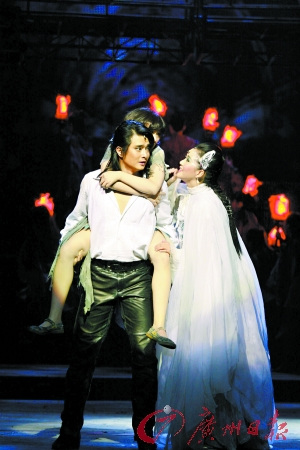
On April 10th, 1994 the hit-musical Les Miserables, opened at the Hiten Theatre in Osaka, Japan.
Click here to listen to a recording of "One Day More" performed by the Japanese cast.
The Japanese "Les Mis" cast performs "One Day More."
Source: http://bit.ly/14bx6ln

Japan? Last time I checked Les Miserables was not a Japanese musical.” Correct. However, what many people don’t realize is that there is a steadily growing musical theatre world outside of the United States. Musicals are no longer solely an American, or even British, art form.

Look at the Shiki Theatre Company in Japan – they’ve been producing original musicals since 1962. Look at the Shanghai Grand Theatre which in 2011 produced the first all-Chinese production of “Mamma Mia,” or even the partnership between the New York Musical Theatre Festival (NYMF) and the Korean Daegu International Music Festival. And not only are these shows being produced and performed in their countries of origin, but Korean musicals are touring to Japan, Japanese musicals to Taiwan, etc.

COMPARE: Broadway "Mamma Mia" vs. Beijing "Mamma Mia"


EXPANSION AND EVOLUTION
"Butterflies" was China's first Broadway-style musical.
Source: http://bit.ly/10SoHxl
How is it that something so “quintessentially” American is finding its way into the hearts and minds of people all across Asia? The culture-specific evolution of the art form speaks for itself:
Asian countries are not only latching on to Western stories and scores, but they are now expanding on that foundation and creating their own works: “As countries have yearned for independence, musicals have had to accommodate their particular tastes. American and British productions have been staged in other languages, and new markets have been created and know-how accumulated. Now these countries are starting to make the things that people want to see.”

Who knows, perhaps in coming years the musical will no longer be defined as an American art form, but rather as an international art form. Best keep an eye out.

SIGNATURE THEATRE CROSSING BORDERS
For our 2013 SigLab project, Signature Theatre will be spending July 9th-27th workshopping a new musical called “Spin,” based on the hit Korean comedy, “Speedy Scandal”:

Faded pop star Evan coasts through life. However, when a surprise daughter and grandson arrive on his doorstep, Evan must choose between the gift of family and the glittering appeal of fame. Spin is a humorous, charming and heartwarming tale about what really matters in life.”

LEARN MORE:
Japan

China

Korea

In this blog post we’ve focused on the expansion of musical theatre into Asia. However, the musical theatre movement in many other countries and continents is alive and well! Click here to learn about Theatre Communication Group’s international Music Theatre NOW Competition.

Share

Twitter Delicious Facebook Digg Stumbleupon Favorites More